


The History of Tĩn Fish Sauce
We are now stepping into the 300-year journey of traditional fish sauce making.
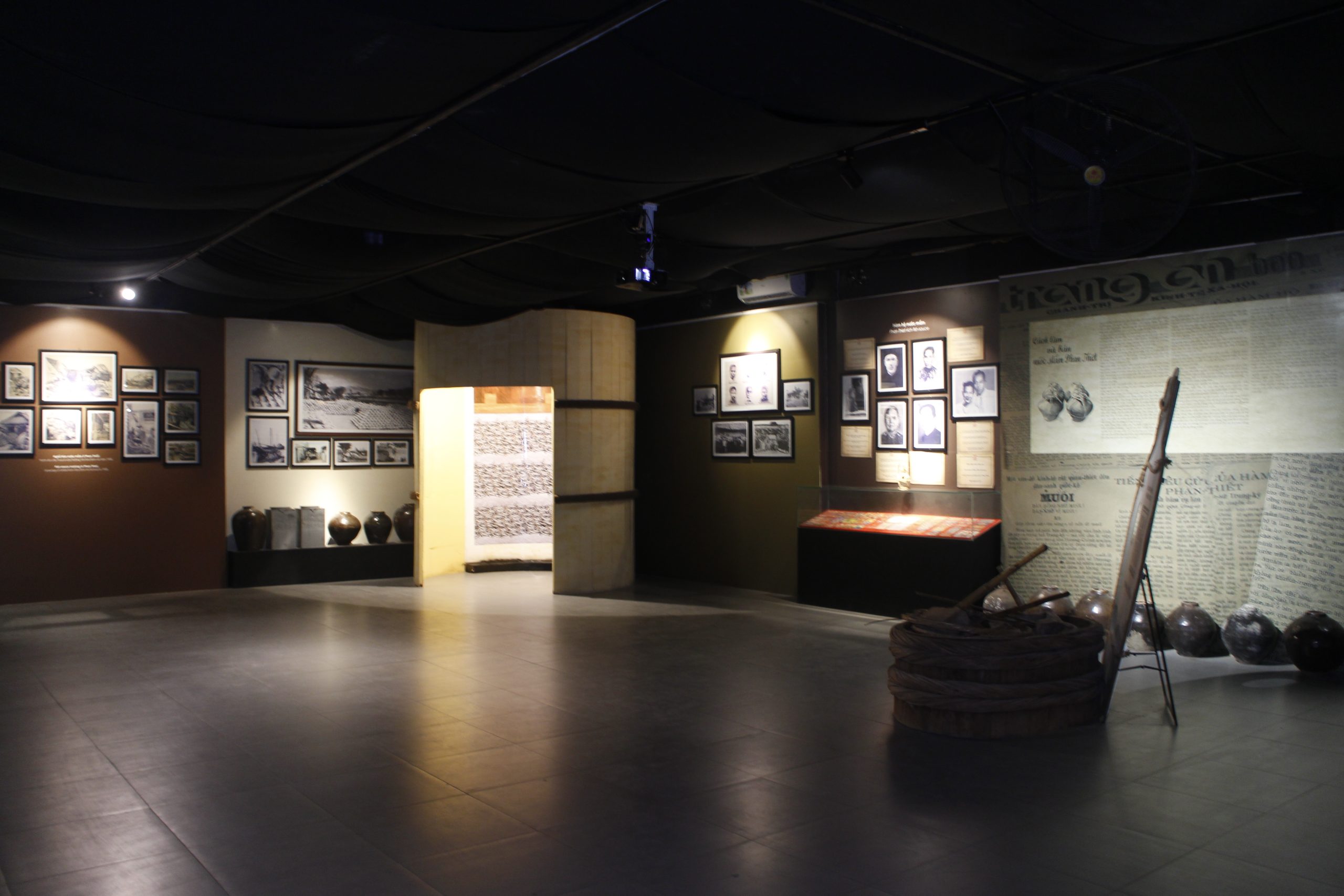
In the old days, the people of Phan Thiết lived on three main crafts: fishing, fish sauce making, and pottery. Back then, all Vietnamese households used fish sauce stored in ceramic jars called “tĩn”. These jars were sealed with a clay lid made from porcelain bowls, covered with a mixture of lime, molasses, and silk fiber glue, and labeled with a square paper seal. They were carried by ropes and transported on bầu boats to every corner of Vietnam — accounting for up to 80% of the country’s market share.
This was the purest form of “mắm rin” fish sauce — naturally extracted, rich, and flavorful beyond comparison. The thick ceramic walls of the tĩn helped preserve the fish sauce perfectly, maintaining its distinct aroma and superior taste over time.
And here’s something remarkable that few people know — despite nearly 100 million Vietnamese consuming fish sauce daily, most do not know who the founder of the craft was.
He was Trần Gia Hòa, a native of Phan Thiết, and the first Vietnamese person to put fish sauce into ceramic jars, turning it into a commercial product. He organized the distribution of fish sauce by bầu boats throughout the country, laying the foundation for the renowned Phan Thiết fish sauce industry.
For his contribution, Emperor Nguyễn honored him with the title of “Bát Sản” official.
Beside him was Mr. Cửu Phùng, a ninth-rank mandarin, who played a key role in developing the Phú Quốc fish sauce trade, famous for the “Three Crabs” brand (Ba Con Cua). Interestingly, many major fish sauce producers in Phú Quốc trace their roots back to Phan Thiết — the Phan Thiết fish sauce tradition dates back 300 years, while Phú Quốc’s history spans about 200 years.
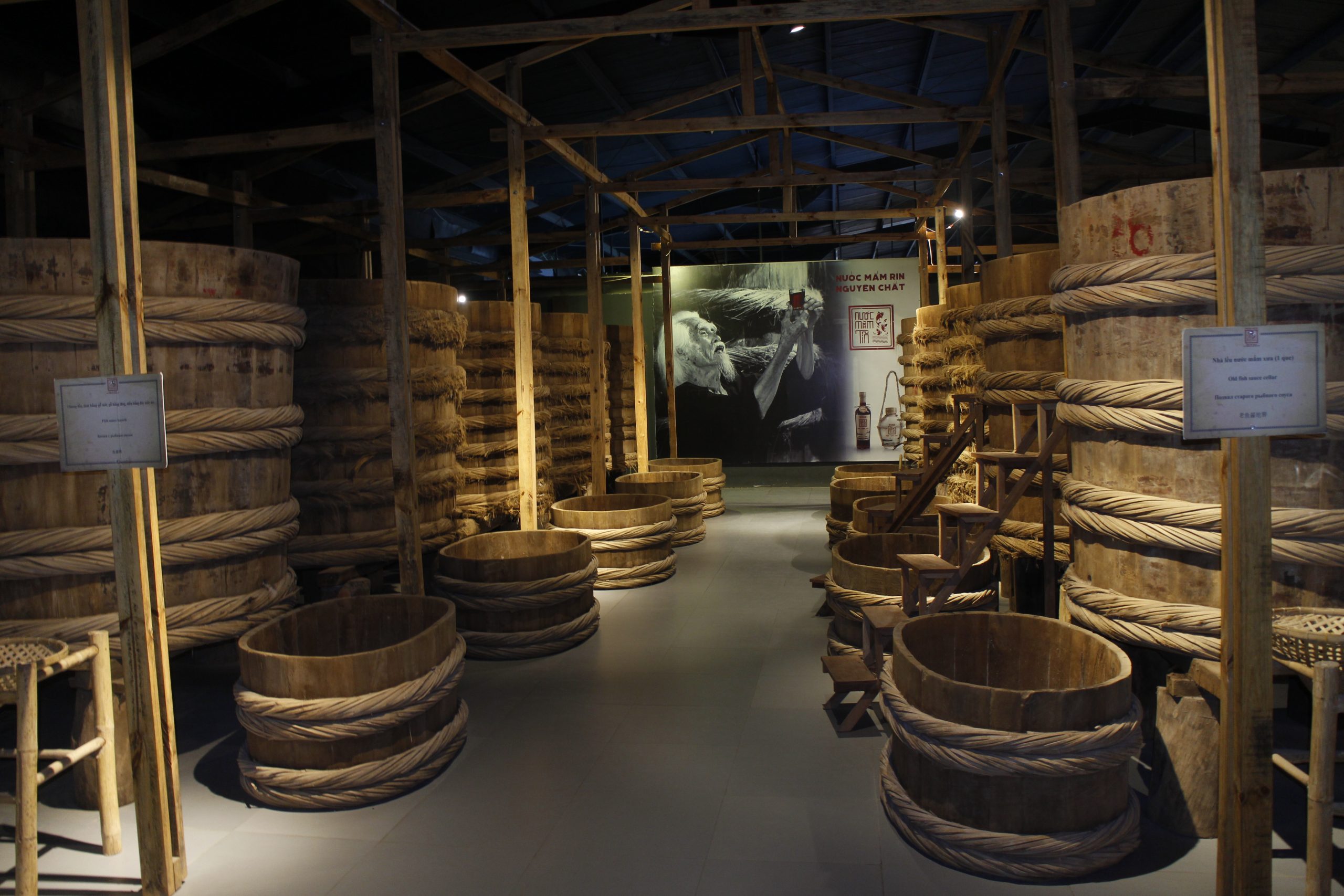
Over there, you can see a “que”, which refers to a fermentation house containing 10 barrels. Owning five “que” was the mark of a “Hàm Hộ”, or fish sauce tycoon. You can also watch the traditional fish sauce-making process on the LED screen nearby.
The fish used is anchovy (cá cơm than) — larger and darker than regular anchovies — yielding fish sauce with a deep amber color. The filtering process used rice husks and bamboo pipes (called “lù”) to let the sauce flow slowly into wooden barrels, ensuring purity. The small yellow sticks nearby represent labor tokens used to calculate the fishermen’s wages — each token stood for a share of fish delivered.
Visitors can also taste authentic “mắm rin”, directly drawn from the wooden fermentation barrels here. Few people know that “mắm rin”, the first extraction of fish sauce, was traditionally kept for family use only, as it was too precious and concentrated to sell. One liter of this premium fish sauce could be diluted into four to five liters of ordinary fish sauce.
Tasting “mắm rin” is much like sampling fine wine — a refined experience. You’ll first sense a bold salty note, followed by a smooth, mellow middle tone, and finally a rich lingering finish that stays on the palate — unlike industrial sauces that fade quickly. The flavor feels full-bodied and rounded, achieved only through slow, natural fermentation in oak barrels for over 12 months — a process that captures the true soul and depth of Phan Thiết’s traditional fish sauce.
The Art of “Cẩn” Fish Sauce
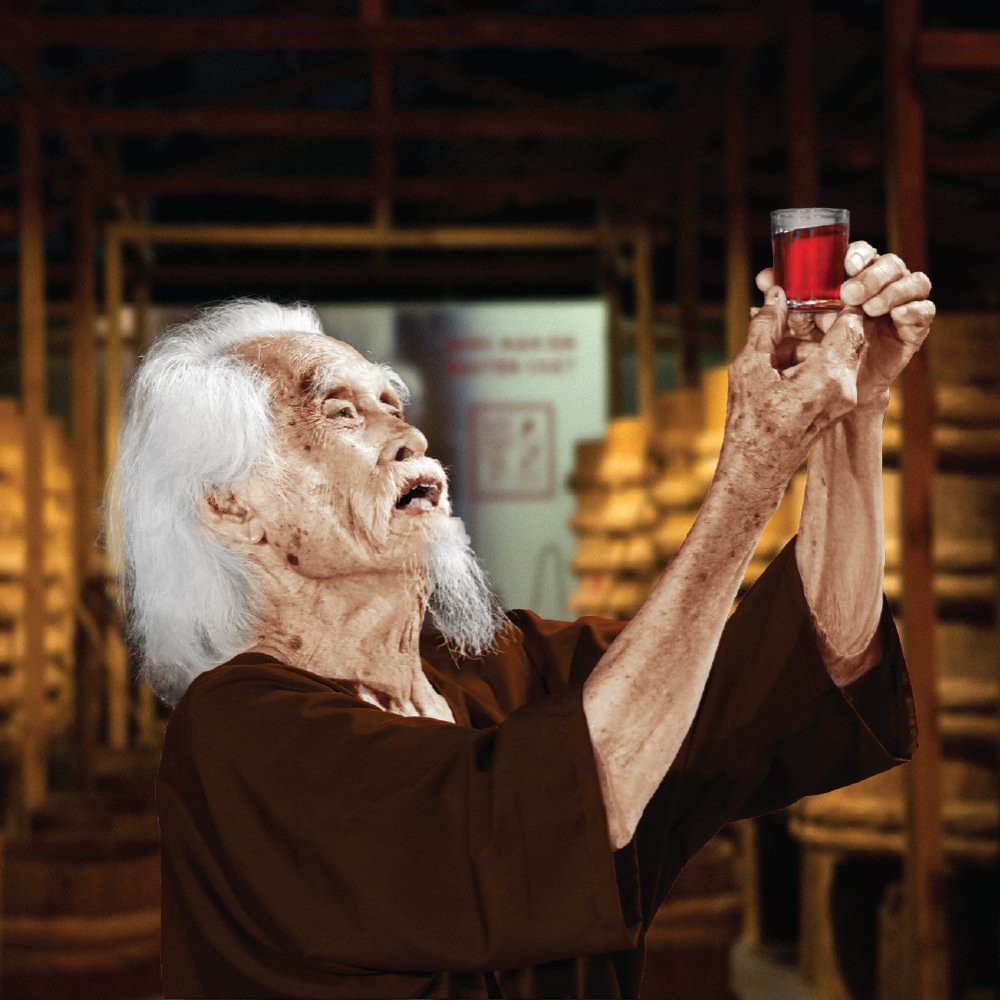
Over there is Mr. Sáu, a 93-year-old man from Phan Thiết. Can you guess what he’s doing?
He is performing the traditional process known as “cẩn nước mắm” — the final inspection and clarification of fish sauce before it is released for sale.
This meticulous step is carried out by master artisans after 12 months of continuous extraction from the fermentation barrels (thùng chượp) and settling barrels (thùng trổ). The fish sauce is carefully examined by sight — when it becomes crystal clear, with a deep amber color, fragrant aroma, and a balanced taste that starts salty, ends sweet, and fills the palate — only then is it considered ready for bottling. At that stage, the fish sauce is poured into ceramic tĩn jars, sealed with a clay lid, labeled with a square paper seal, tied with rope, and finally loaded onto bầu boats to be shipped and sold across Vietnam.
Lịch sử nước mắm Tĩn
Chúng ta đang bước qua của nghề nước mắm truyền thống 300 năm.
Ngày xưa người Phan Thiết sống bằng 3 nghề chính: đánh cá, làm nước mắm và làm tĩn gốm. Hồi đó toàn bộ người Việt Nam đều ăn nước mắm đựng trong tĩn gốm, đậy bằng chén sành, trét vôi trộn mật mía và nước dây tơ hồng, dán nhãn giấy vuông, xách bằng dây thừng bện. chở bằng ghe bầu đi bán khắp Việt Nam, chiếm đến 80% thị phần cả nước. Đây là loại nước mắm rin nguyên chất, ngon không gì sánh bằng. Tĩn gốm ánh sáng không xuyên vô được nơi nước mắm giữ tốt và tiếp tục ủ thêm nên sẽ thơm ngon vô đối.
Và đây, đến Phan Thiết sẽ là vô cùng thiếu sót nếu chúng ta không biết điều này. Gần 100 triệu người Việt Nam ăn nước mắm nhưng không biết ông tổ nghề là ai… Ông chính là Trần Gia Hòa, người Phan Thiết, ông là người Việt Nam đầu tiên cho nước mắm vào tĩn, thương mại hóa, chở ghe bầu đi phân phối khắp nơi, làm nên ngành nước mắm Phan Thiết lẫy lừng Việt Nam. Vua Nguyễn đã ban ông chức quan Bát phẩm vì công trạng này. Kế bên ông là ông Cửu Phùng, quan cửu phẩm có công trạng khai phá ngành nước mắm Phú Quốc, nổi tiếng với nước mắm tĩn hiệu 3 con cua… Những hàm hộ lớn nước mắm Phú Quốc đều có gốc người Phan Thiết (ngành nước mắm Phan Thiết đã 300 năm, còn Phú Quốc là 200 năm)
Kia là 1 que (1 nhà thùng gồm 10 thùng), có đủ 5 que bạn sẽ được gọi là hàm hộ. Các anh chị có thể tham khảo quy trình làm nước mắm xưa ở màn hình LED …
Các anh chị có thể phân biệt cá cơm than con to, đen, ngon hơn cá cơm thường, làm nước mắm có màu nâu cánh gián. Đây là chổi dùng để đắp lù cùng bộ trấu lọc, lù là ống tre chỗ chảy ra của nước mắm xuống thùng trổ… Còn những que nhỏ màu vàng này là để tính công cho người gánh cá, cuối ngày đếm que lấy tiền.
Anh chị nào muốn thử nước mắm rin, kéo rút trực tiếp từ thùng gỗ thì thử ở đây….Nhiều anh chị chưa biết, nước mắm rin người Phan Thiết chỉ làm để ăn, đây là mắm nhỉ nước đầu tiên, thơm ngon vô cùng và rất đắt tiền nên khó bán. 1 lít có thể pha ra 4-5 lít loại thường.
Cách cảm nhận vị nước mắm rin cũng giống như cách thử vị rượu vang, khá công phu: mặn đầu lưỡi, ngọt dần giữa lưỡi, đọng lại cuối lưỡi, nhẫn nhẫn trong cuống họng và đọng rất lâu, không trôi đi như mắm công nghiệp. Cảm thấy đầy vòm họng, rất dày… không loãng… chỉ có lên men tự nhiên chậm trong thùng lều gỗ hơn 12 tháng mới cho cảm giác đầy đủ như vậy.
Cách “cẩn” nước mắm
Kia là ông Sáu, 93 tuổi, người Phan Thiết, đố các anh chị ông đang làm gì? Ông đang cẩn nước mắm, thuật ngữ của cách soi nước mắm trước khi xuất xưởng của nghệ nhân… sau 12 tháng kéo rút liên tục từ thùng chượp và thùng trổ, đến khi soi thấy nước mắm trong suốt, màu nâu cánh gián, thơm lừng, vị mặn đầu ngọt hậu và đầy vòm miệng như chúng ta vừa thử thì sẽ xuất xưởng, cho vào tĩn gốm, đậy nắp, dán nhãn vuông, bện dây thừng, chở bằng ghe bầu đi bán…

